
In the fast-growing world of digital textile printing, sublimation paper plays a critical role in determining the final print quality. While many users focus on printer models and ink types, the importance of sublimation paper weight is often underestimated. The weight of sublimation paper, measured in grams per square meter (gsm), affects not only print quality but also ink absorption, drying time, transfer rate, and cost-efficiency.
This guide provides an in-depth comparison of commonly used sublimation papers: 31g, 50g, and 70g. Based on controlled testing and real-world applications, we'll help you understand which paper weight best suits your production needs.
Sublimation paper weight refers to how much a square meter of paper weighs. Lighter paper (e.g., 31g) uses less pulp and is generally more cost-effective and flexible. Heavier paper (e.g., 70g) is denser, more stable during printing, and better suited for high-ink or complex designs.
Choosing the right weight of sublimation paper can:
To assess performance differences, we conducted a standardized test using the same graphic (high ink volume, full color), printer, and fabric. The only variable was paper weight. Here's what we found:
Pros:
Cons:
Best suited for:
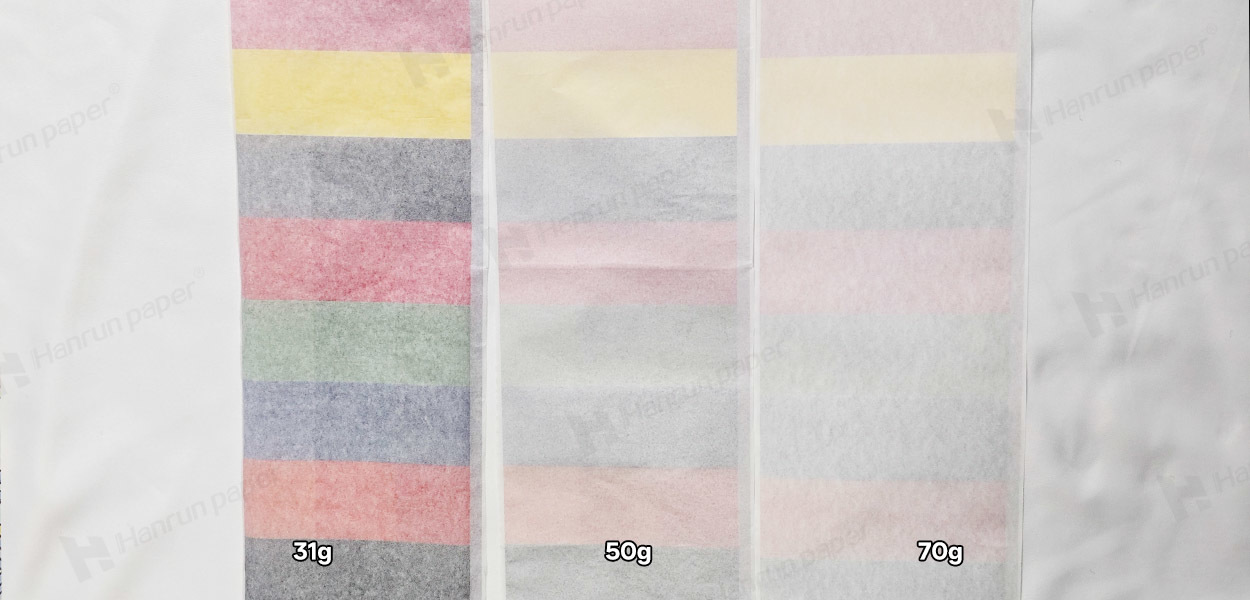
Pros:
Cons:
Best suited for:
Pros:
Cons:
Best suited for:

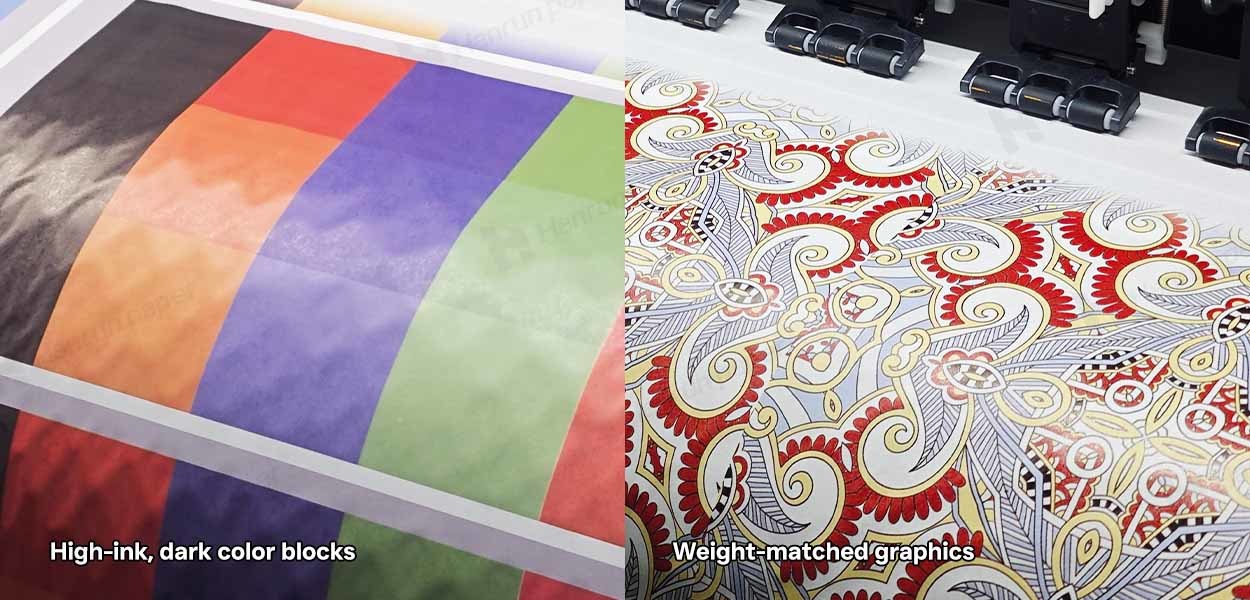
In addition to testing the same graphic on all paper types, we also printed tailored graphics with ink volumes optimized for each paper weight. The results showed that adjusting designs to match paper capacity significantly improved print flatness and transfer efficiency on lighter papers.
For example:
This proves that paper performance is not only about GSM—it's also about how well you manage ink load and graphic composition.
When selecting sublimation paper, consider the following factors:
For bold, vibrant graphics with rich colors, 70g or higher is preferred
For low-ink or light designs, 31g or 50g may suffice
Denser fabrics benefit from higher GSM paper due to better ink retention
Thin or temporary-use fabrics may work well with lower GSM paper
Consider the trade-off between print quality and material cost
Properly optimizing your design and ink volume can make lower GSM paper a viable option for many applications
There's no one-size-fits-all sublimation paper. The ideal GSM depends on your printing needs, product type, and budget. At Hanrun Paper, we offer a full range of sublimation papers from 29g to 120g, designed to meet the varied needs of printers across the globe. Whether you're printing fashion garments, home textiles, or promotional items, we have the right sublimation paper for you.
Contact us today to request free samples, get expert advice, and elevate your sublimation printing with the perfect paper solution.

